
English| EUR
Suggested for you
More currencies
Choose a language
Parasailing carries inherent risks like any aerial activity, but the modern version practiced in Tanjung Benoa operates under significantly stricter equipment standards and weather protocols than most visitors expect. The question is not whether risk exists, but how operators manage it and what conditions amplify or reduce that risk.
Quick answer
Parasailing in Tanjung Benoa is statistically safer than many common water sports when conducted by licensed operators using certified equipment. Serious incidents are rare and typically result from operator negligence or extreme weather rather than the activity itself. The harness system uses triple-redundant attachment points, and flights occur only when wind speeds stay below 15 knots and wave height remains under one meter, conditions monitored continuously throughout operating hours from 08:00 to 16:00 daily.
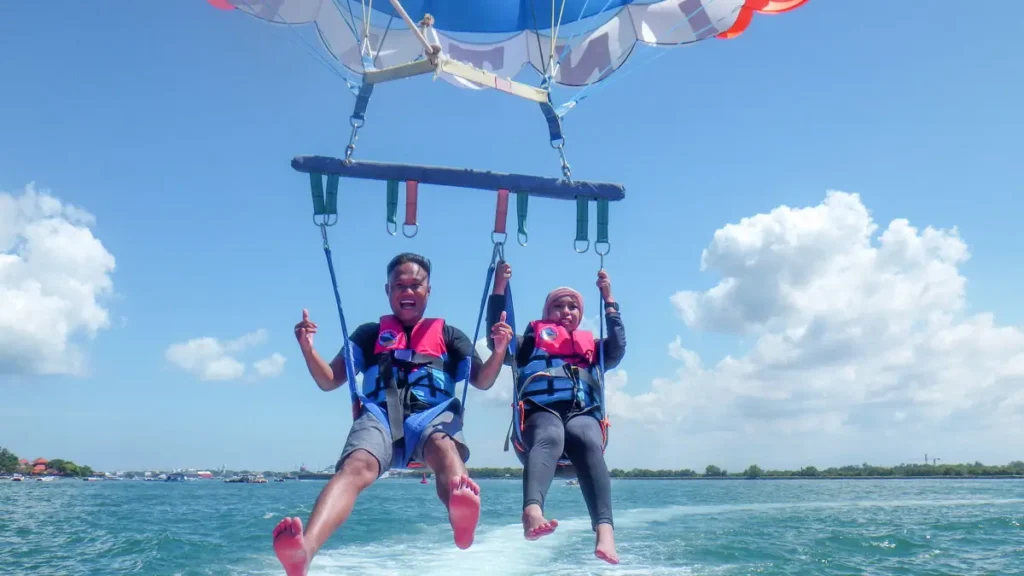
The harness that lifts a parasailer off the boat deck uses three independent connection points, each rated to hold the full load alone. This redundancy means a single equipment failure does not cause a fall. The canopy itself deploys using ram-air technology borrowed from parachuting, maintaining stable flight even when wind gusts shift direction. These engineering improvements, mandated across Indonesian commercial operations since 2019, address the mechanical failures that plagued earlier parasailing systems. Weather assessment determines most of the actual risk profile. Operators in Tanjung Benoa measure wind speed, wave height, and visibility before every departure, refusing flights when conditions exceed safety thresholds. The calm morning window between 09:00 and 12:00 offers the most predictable environment, with thermal activity and afternoon gusts not yet established. A parasail canopy behaves unpredictably in turbulent air, so timing matters as much as equipment quality. Operator certification separates recreational parasailing from reckless stunts. Licensed boat captains complete marine safety training and hold valid commercial permits, while deck crew undergo harness-attachment drills and emergency-descent procedures. Insurance requirements force compliance because a single incident can revoke an operator's business license. The regulatory structure in Bali's water-sports zones has tightened considerably, especially in high-traffic areas like Tanjung Benoa where multiple operators share the same coastal stretch. The comparative risk context helps frame the question properly. Parasailing involves less physical exertion than jet skiing, fewer collision opportunities than banana-boat rides, and more controlled ascent than cliff jumping. The passive nature of the activity reduces variables the participant can mishandle. Most injuries occur during takeoff or landing when passengers stand or shift weight incorrectly, not during the flight itself. Understanding what you control versus what the operator controls clarifies where vigilance matters and where trust in the system is appropriate.
“The harness system uses three independent connection points, each rated to hold the full load alone, so a single equipment failure does not cause a fall.”
Parasailing in Tanjung Benoa often attracts concerns due to its aerial nature, but many fears stem from misunderstandings regarding equipment and standardized safety procedures. Distinguishing between perceived risks and operational realities helps visitors assess their comfort levels objectively.
MythParasailing ropes snap frequently
FactModern operators use high-strength synthetic tow lines regularly inspected and replaced according to international safety standards.
MythIf the boat stops, the parachute collapses instantly
FactParachutes are designed to descend slowly, allowing the canopy to act as a buoyant device upon landing on water.
MythParasailing is a high-risk activity for everyone
FactMost incidents occur due to ignoring weather guidelines, whereas professional operators strictly monitor sea conditions and wind speeds to maintain safety.
MythEquipment is rarely inspected
FactOperators in Tanjung Benoa follow routine maintenance schedules for harnesses, life jackets, and tow vessels to ensure all gear meets required safety benchmarks.
The best arrival window is 09:00–12:00, as this period typically offers calmer sea conditions and moderate sun intensity. Flying during these hours minimizes risks associated with stronger afternoon winds and changing tides.
Low humidity, 26°C to 29°C
Stable trade winds create consistent and predictable conditions for parasailing. Optimal visibility and clear skies are common during these months.
Humid, 27°C to 30°C
Expect higher humidity and occasional rainfall. Morning sessions are preferred to avoid afternoon storm activity.
—
Arriving between 09:00–12:00 ensures you utilize the window with the most favorable sea state. Calm morning waters are safer for launch and recovery.
Verdict: For the most stable conditions, plan your visit for the dry season months of April through October, arriving daily between 09:00–12:00.
Most parasailing incidents stem from avoidable errors rather than inherent equipment failure. Understanding these common missteps helps you stay safe above Tanjung Benoa's waters.
Skipping the pre-flight safety briefing entirely
Operators cover harness adjustment, hand signals, and emergency procedures for a reason. Listen closely and ask questions if any step is unclear before you leave the boat.
Ignoring visible weather warnings or rough sea conditions
If staff postpone your slot due to wind or waves, respect that call—your safety depends on sea state, and experienced operators know the local thresholds that make parasailing risky.
Wearing loose clothing, dangling jewelry, or unsecured accessories
Secure or remove anything that can tangle in lines or blow off at altitude. Operators will ask you to stow phones, hats, and scarves before harnessing up.
Failing to confirm your harness fit before takeoff
A loose harness can shift mid-flight, while an over-tight one restricts breathing. Tell the crew immediately if straps pinch, slide, or feel unstable during the deck check.
Panicking and grabbing lines or fighting the harness in the air
Sudden movements can destabilize your position. If something feels wrong, use the agreed hand signal to communicate with the boat crew rather than trying to self-correct.
Booking with an unlicensed beach vendor to save money
Unregulated operators may skip insurance, use worn equipment, or lack trained spotters. Choose a certified provider even if the rate is slightly higher—liability coverage and maintenance standards matter.
Accessing the public beach area in Tanjung Benoa requires no payment. Individual parasailing activity costs vary depending on the operator chosen.
Verdict: While beach access is 0 IDR, total costs for parasailing activities fluctuate based on the specific operator and equipment standards provided.
Parasailing activities at Tanjung Benoa operate on a consistent daily schedule to accommodate visitors. These hours apply throughout the week.
Tanjung Benoa is located on the southern tip of Bali, accessible primarily via the Jl. Pratama coastal road. Private transport or taxi remains the most reliable method to reach the designated water sports activity centers.
Follow Jl. Bypass Ngurah Rai toward Nusa Dua, then turn onto Jl. Pratama
Direct service from Ngurah Rai International Airport to Jl. Pratama
Plan your arrival for the 09:00–12:00 window to ensure optimal sea conditions. Upon arrival at the address on Jl. Pratama, look for signage identifying specific, licensed water sports operators.
Everything you need to know about is parasailing dangerous
Parasailing in Tanjung Benoa is considered a controlled activity when managed by certified operators, though like any water sport, it carries inherent risks. Participants should always follow instructions provided by the crew to ensure a secure experience. Determining if is parasailing dangerous often depends on adhering to these professional safety protocols.
Operators utilize standardized harnesses, life jackets, and regular maintenance checks on speedboats to mitigate potential hazards. Staff members are trained to monitor wind speeds and sea conditions throughout the day. These procedures are fundamental to managing whether is parasailing dangerous for the average visitor.
Children may participate depending on age and weight restrictions set by individual operators, usually requiring a parent or guardian's consent. It is essential to discuss specific requirements with the crew before booking your session. Always evaluate if is parasailing dangerous for your child based on their comfort level with heights and water.
The best arrival window is 09:00–12:00 when sea conditions are typically calmer and the wind is more stable. Avoiding the late afternoon helps steer clear of changing weather patterns that might complicate flight conditions. Planning your visit during these hours is a practical way to prioritize your safety.
Following the briefing provided by instructors is critical for a smooth flight and landing. Participants must wear the provided safety gear and remain seated as directed by the pilot or ground crew. Adhering to these simple guidelines helps ensure a secure parasailing Bali adventure.
Sudden changes in wind speed or rainfall can impact the stability of the parasail, leading operators to pause activities until conditions improve. Checking local forecasts helps you understand the environment before you head to the beach. Always defer to the judgment of experienced instructors regarding current maritime safety.
Beginners are often paired with experienced instructors or provided with comprehensive ground training before departure. Because you are tethered and under constant supervision, many find the activity accessible regardless of prior experience. It is a common misconception that the activity is unsafe for those trying it for the first time.