
English| EUR
Suggested for you
More currencies
Choose a language
Weight restrictions for parasailing in Tanjung Benoa exist for equipment safety and flight stability, not discrimination. Most operators enforce limits based on harness capacity and parachute load ratings. Understanding these requirements before you arrive prevents disappointment at the beach.
Quick answer
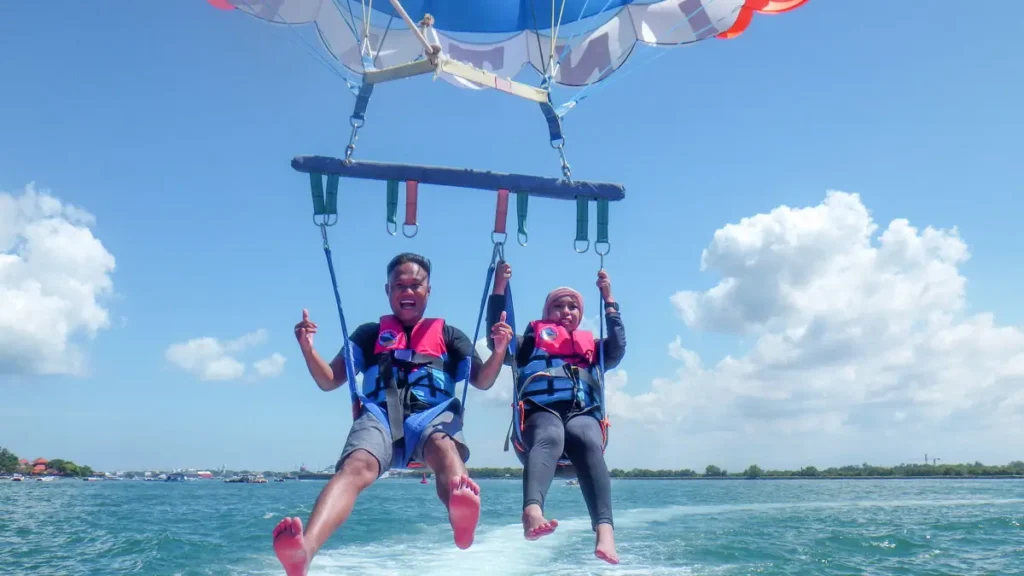
The standard parasailing weight limit in Tanjung Benoa ranges from 150 to 160 kilograms (330-352 pounds) for tandem flights, with solo flights typically capped at 120 kilograms (265 pounds). Individual operators may vary slightly based on their equipment specifications and insurance requirements. Harness design, parachute size, and boat towing capacity all factor into these maximums, which are posted at water sports centers along Jalan Pratama.
Tanjung Benoa's parasailing operators work with standardized equipment that dictates participant weight boundaries rather than arbitrary policy. The harness systems used across the beach employ rated carabiners and webbing with manufacturer-specified load limits, typically certified to 150 kilograms for tandem configurations. Parachute canopies—most commonly 32 to 38 feet in diameter—perform optimally within calculated weight windows that ensure proper inflation angle and descent speed. Exceed those parameters and the chute either fails to lift properly or creates unsafe landing dynamics. Weight restrictions for water sports activities in Bali also reflect insurance underwriting terms that operators must honor. Policies covering parasailing incidents specify maximum participant weights, and staff at Tanjung Benoa verify this before clipping clients into flight gear. Solo riders face tighter limits because single-rider parachutes are smaller and the margin for error narrows. Tandem flights distribute load across two attachment points and use reinforced canopies, which is why the combined weight ceiling sits higher. Operators measure weight discreetly—usually via a platform scale near the equipment shed—and discuss alternatives if you fall outside the range. Beyond the parasailing Bali weight limit itself, body composition matters for harness fit. Chest and waist straps must close securely without excessive slack or dangerous tightness, and buckle systems have fixed adjustment ranges. A participant within the weight threshold but with an unusually wide torso may still struggle with proper harness seating. Operators conduct a harness check on the sand before the boat departs, and this is when fit issues surface. If the gear does not sit correctly, the ride will not proceed regardless of scale numbers. Timing your parasailing session during the optimal morning window between 9:00 and 12:00 offers calmer sea conditions that make weight distribution less critical during takeoff and landing. Afternoon gusts can amplify how weight affects flight stability, especially near the upper limit. If you are close to the maximum, morning flights give you the smoothest experience and the least resistance from operators who may otherwise hesitate in marginal conditions.
“Harness systems and parachute canopies carry manufacturer load ratings that define the boundaries operators enforce on the beach.”
Most parasailing disruptions at Tanjung Benoa stem from undisclosed weight information and ignoring weather warnings. Operators halt flights when wind speeds exceed safe thresholds, regardless of bookings.
Assuming all days are flyable
Parasailing stops during high winds and monsoon squalls; operators assess conditions each morning and may cancel without prior notice if safety margins are breached.
Understating your actual weight to the operator
Equipment is rated to precise load limits; inaccurate declarations force last-minute harness changes or flight refusal at the beach, wasting your slot.
Booking tandem flights without confirming combined weight
Two-person harnesses have stricter maximums than solo rigs; confirm the combined threshold with your operator before arrival to avoid separation or cancellation.
Arriving after 12:00 and expecting calm conditions
Afternoon thermal winds and tidal shifts increase swells and gusts, prompting earlier closures; the 09:00–12:00 window offers the most reliable flying weather.
Tanjung Benoa parasailing operators maintain consistent daily hours to assist visitors with equipment and weight limit verifications. The facility is open seven days a week.
The Tanjung Benoa area does not charge an entrance fee for visitors. Costs are incurred only when purchasing individual water sports activities.
Verdict: You pay 0 IDR to enter the area, with total costs depending solely on the specific water sports activities selected.
Everything you need to know about parasailing bali weight limit
The standard parasailing bali weight limit typically ranges from 80kg to 100kg per person, depending on the operator's safety protocols. Always check with your specific provider, as these capacity guidelines exist to ensure the safety of both participants and the boat crew. Operators strictly enforce this parasailing bali weight limit to maintain proper lift and landing control.
Exceeding the total weight capacity is generally not permitted for safety reasons, even if the combined weight seems manageable. Most recreational parasailing harnesses are designed for individual or specific tandem weight distributions. If you are near the parasailing bali weight limit, the instructor will assess wind conditions before confirming if a flight is safe.
Yes, most operators require participants to be at least 7 to 10 years old to engage in this activity. While the parasailing bali weight limit is the primary physical constraint, younger children must also be accompanied by an adult if permitted by the operator. Safety gear such as life vests and helmets are mandatory for all participants regardless of age or weight.
To ensure you meet the requirements, review the safety guidelines provided by your chosen operator before booking. It is advisable to disclose your approximate weight during the reservation process to avoid issues upon arrival. Observing the instructions from the boat crew during the briefing is crucial for a smooth takeoff and landing.
Yes, the parasailing bali weight limit may be adjusted by operators based on real-time weather, particularly wind speed and sea conditions. High winds or strong gusts can make lighter passengers unstable, while heavier loads require specific wind resistance to lift correctly. Instructors at Tanjung Benoa monitor these factors continuously to ensure safe flight operations.
There is no entrance fee required to access the Tanjung Benoa water sports area, as the entry is 0 IDR. Individual water sports activities are charged separately by each provider. You can enter the beach area freely to research different operators and compare safety standards before making your selection.